๐‘ณ๐’๐’๐’Œ๐’Š๐’๐’ˆ ๐‘ฉ๐’‚๐’„๐’Œ: ๐‘ฉ๐’“๐’‚๐’…๐’š ๐‘ฏ๐’๐’Œ๐’†โ€™๐’” ๐’‡๐’Š๐’“๐’”๐’• ๐’ˆ๐’‚๐’Ž๐’† ๐’‚๐’” ๐’‰๐’†๐’‚๐’… ๐’„๐’๐’‚๐’„๐’‰

Looking Back is a Special Feature by Jeff Cummins Highlighting Key Games

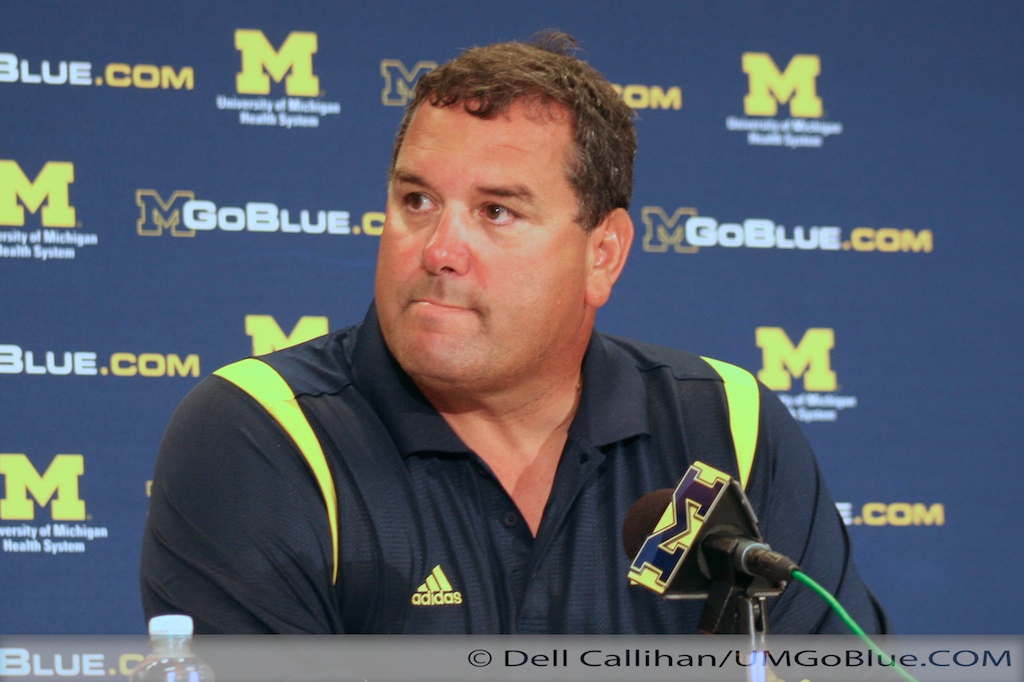
The first installment in this weekโ€™s series on the first games of new Michigan coaches takes us back to 2011. Michigan was ready for a fresh start, and the Wolverines got a fresh hero in Brandon Herron.
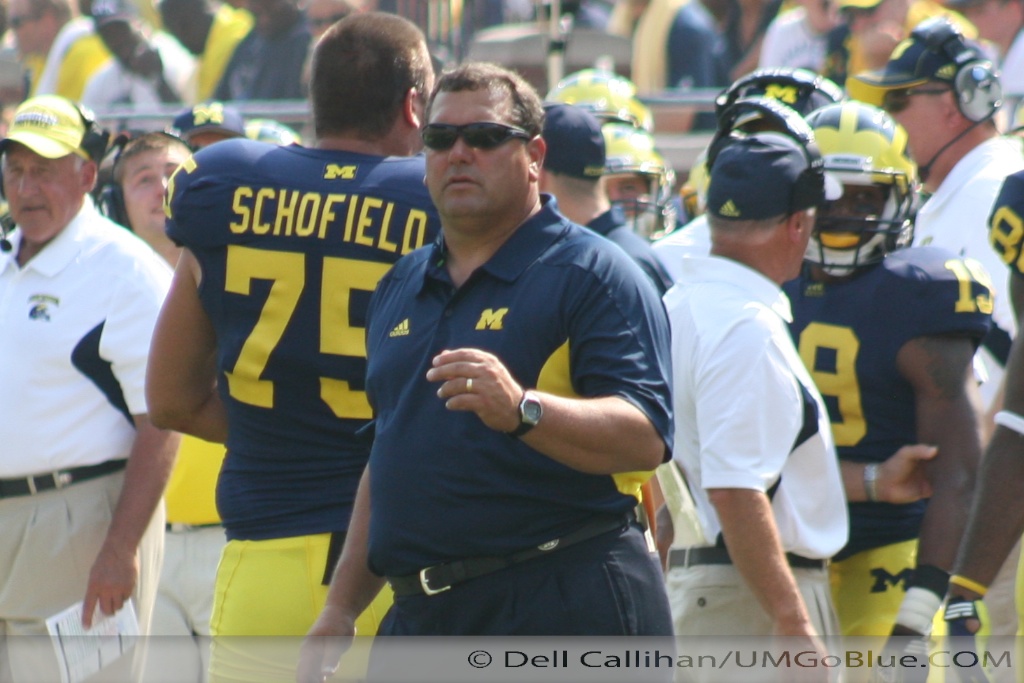
Prior to that game, few among the Michigan faithful had even heard of Herron. The senior linebacker from Dallas, Texas had mostly toiled in anonymity during his time in Ann Arbor, but the hiring of Brady Hoke as head coach signaled a return to Michiganโ€™s core football approach, which included a heavy focus on defense.

Still, midway through the second quarter, the Wolverines looked surprisingly sluggish, possibly due to a 30-minute weather-related stoppage. Western Michigan was threatening to take the lead for the second time, and the Wolverines were obviously in need of a spark. Freshman linebacker Jake Ryan blitzed and got just a piece of the ball, which landed in the waiting hands of Herron. Escorted by a squad of blockers, Herron made his way 94 yards into the south end zone of Michigan Stadium, and the Wolverines produced their first signature play of the 2011 season.
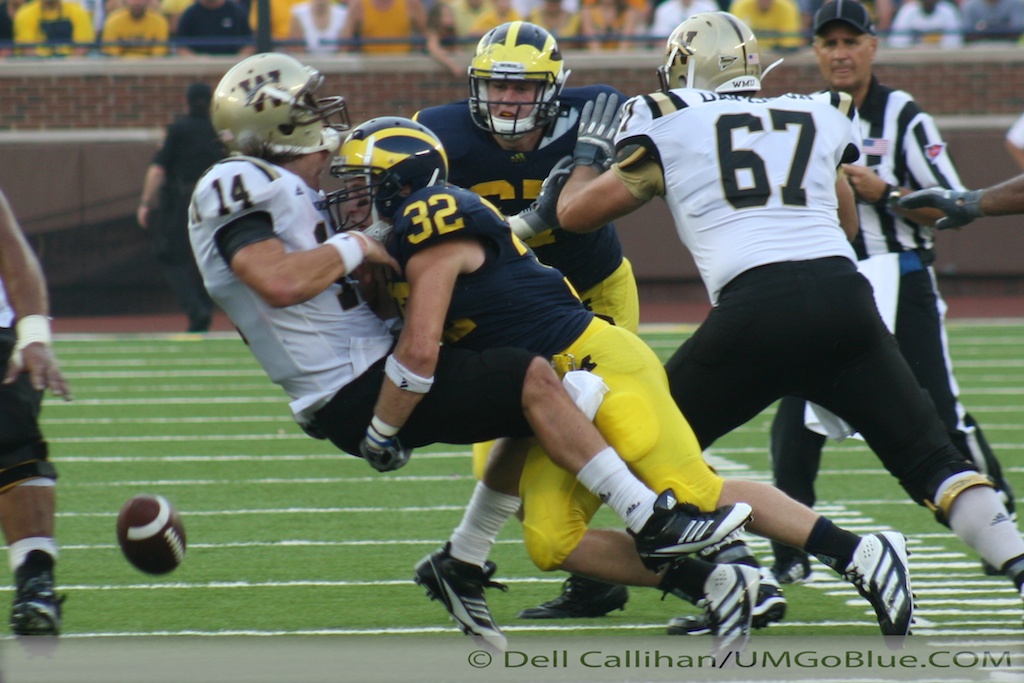
From that point, Michigan methodically increased its lead to 34-10, punctuated by Herronโ€™s second score of the game, when safety Jordan Kovacs forced a fumble that Herron gleefully returned 29 yards for a touchdown. With 1:27 left in the third quarter, ominous weather prompted officials from both schools to call the game, and for the first time in school history, weather forced an early end to a Michigan football game.
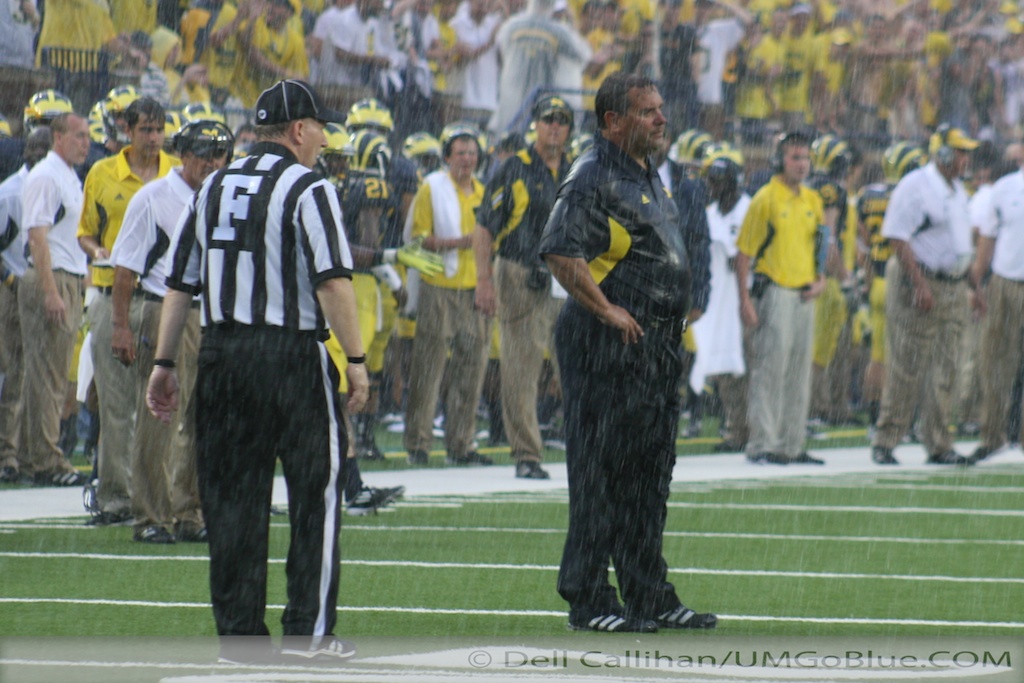
After a slow start, Hokeโ€™s first game as head coach produced a thoroughly Schembechler-esque domination. Kovacs led the defense with 10 tackles, two sacks and a forced fumble. Fitzgerald Toussaint was showcased as the teamโ€™s featured running back in a return to a traditional smashmouth Michigan running game, and quarterback Denard Robinson completed all five of his passes, foreshadowing a legendary performance just a week later.
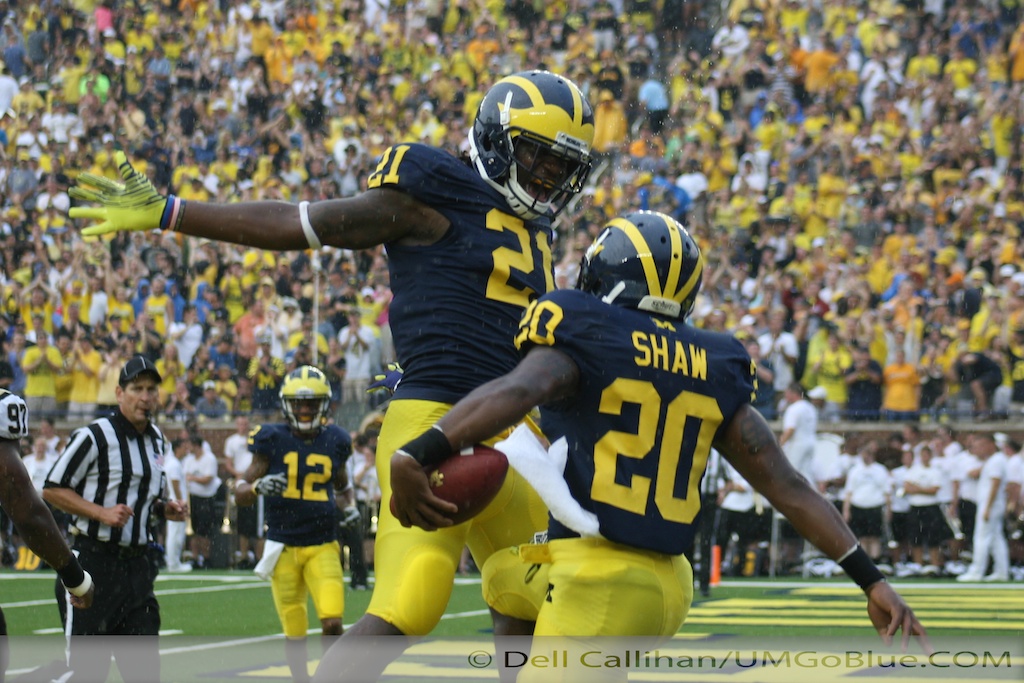

Most important of all, Hoke earned a victory in his first game as head coach, returning the team to its hardnosed roots, which would pay dividends later in the season.
Thanks to ABC Sports and YouTube poster Mr_E_Man 8131 for this broadcast of the 2011 Michigan season opener.

As always, we own nothing and do not profit from this blog post.


This and other great content can be found at newyorkwolverine.com

THE GAME – ๐‘ณ๐‘ถ๐‘ถ๐‘ฒ๐‘ฐ๐‘ต๐‘ฎ ๐‘ฉ๐‘จ๐‘ช๐‘ฒ: ๐‘ด๐‘ฐ๐‘ช๐‘ฏ๐‘ฐ๐‘ฎ๐‘จ๐‘ต ๐‘ฝ๐‘บ. ๐‘ถ๐‘ฏ๐‘ฐ๐‘ถ ๐‘บ๐‘ป๐‘จ๐‘ป๐‘ฌ, 1989

Looking Back is a Special Feature by Jeff Cummins Highlighting Key Rivalry Games

The fifth and final installment of this weekโ€™s series looking back at the football rivalry between Michigan and Ohio State takes us back to 1989. The 1980s were heady economic times in the United States, and the world looked on as the Berlin Wall was knocked down. Changes were starting to accelerate, but in the Big Ten, Michigan used an old school philosophy, and it proved to be just as effective as ever.

Ohio State entered Michigan Stadium with a new coach in 1989. John Cooper was an outsider, born and raised in Tennessee. He began to recruit many speedy athletes to the Buckeyes, a slight change in Ohio Stateโ€™s offensive attack. By contrast, Bo Schembechler, in his final year at Michigan, still believed in two running backs, using both the pro set and the I-formation. Early in the game, Michigan was allowing Ohio State to hang around a little too long. Thatโ€™s when Bo put the game on the backs of his offensive line. Few drives in Boโ€™s 21-year tenure screamed โ€œMichigan footballโ€ like the drive that started at the Wolverinesโ€™ 19 yard line midway through the second quarter. It began with Leroy Hoard knocking several Buckeyes on their rear ends as he bulled his way for a 16-yard gain on first down, and ended when running back Allen Jefferson, lined up as part of a full house backfield, took the ball two yards around left end for the touchdown. Michigan drove 81 yards on 13 plays, with not one passing play in the lot. There was no emphasis on speed in the open field; this drive was simply about old fashioned blocking, and the Wolverines used massive maulers like left tackle Tom Dohring and guard/center Steve Everett, one of the most spirited Wolverines of all time. The final score was 28-18, Michigan, but the tenor of the game was determined on that 81-yard drive, which gave the Wolverines a two-score lead and established how the game was going to unfold.

The 1989 iteration of The Game was Schembechlerโ€™s last; he retired after the season. But there was little concern for the future of the program, because both offensive coordinator Gary Moeller, who took the head coaching job in 1990; and defensive coordinator Lloyd Carr, who took the head coaching job several years after that, were accomplished coaches. Fans enjoyed the Big Ten championship that Michigan won in 1989, but few could have imagined what the team would accomplish eight years later.

This and other great content can be found at newyorkwolverine.com

THE GAME – ๐‘ณ๐‘ถ๐‘ถ๐‘ฒ๐‘ฐ๐‘ต๐‘ฎ ๐‘ฉ๐‘จ๐‘ช๐‘ฒ: ๐‘ด๐‘ฐ๐‘ช๐‘ฏ๐‘ฐ๐‘ฎ๐‘จ๐‘ต ๐‘ฝ๐‘บ. ๐‘ถ๐‘ฏ๐‘ฐ๐‘ถ ๐‘บ๐‘ป๐‘จ๐‘ป๐‘ฌ, 1980

Looking Back is a Special Feature by Jeff Cummins Highlighting Key Rivalry Games

9-3. The mere mention of that score brings smiles to the faces of Wolverines everywhere, as they remember the legendary โ€œSnow Bowlโ€ in 1950.

But no, this isnโ€™t about that game.

The fourth installment of this yearโ€™s series looking back at the football rivalry between Michigan and Ohio State takes us back 1980, thirty years after the Snow Bowl. By this time, Ronald Reagan was the president of the United States, the automobile industry that fueled the midwest for decades had changed significantly, and American society was undergoing massive changes. Some new things were occurring, and in some instances, old things were being revived.

One thing that never needed revival was the rivalry between Michigan and Ohio State. In 1980, both teams entered โ€œThe Gameโ€ with perfect records in the Big Ten and the conference title on the line, as it has been on many occasions. With both teams playing stingy defense, every possession would be critical. Michigan coach Bo Schembechler was acutely aware of this fact, and he designed a game plan that featured a lot of running, with backs Lawrence Ricks, Stan Edwards and Butch Woolfolk repeatedly probing the Ohio State forward wall, secure in the knowledge that if the Buckeyes overcommitted to stopping the run, Michigan receiver Anthony Carter had the speed to make them regret that choice.

Nonetheless, Ohio State grabbed the early lead when Vlade Janakievski kicked a 33-yard field goal to put the Buekeyes up, 3-0. The Wolverines didnโ€™t take long to respond, though. With their backs repeatedly pounding the Ohio State defensive line, the Wolverines drove into Ohio State territory, where Ali Haji-Sheikh kicked a 43-yard field goal to send the teams to their lockers at halftime with the score tied, 3-3.

Michigan used the same game plan in the second half, and when the Wolverines drove to the Ohio State 13-yard line, John Wangler connected with Carter in the end zone to give Michigan a 9-3 lead.

With a one score lead, Michigan appeared poised to take firm control of the game when Stan Edwwards threw an option pass into the Ohio State end zone. However, the Bucheyes were ready, and they intercepted the pass, thwarting Michiganโ€™s threat.

Ohio State had one final chance, on a 4th down and 25 yards to go from the Michigan 47-yard line. Buckeye QB Art Schlichter faded back to pass, but he never saw Robert Thompson, who hit Schlichter right in the chest and drove him to the ground, securing Michiganโ€™s win.

The victory sent the Wolverines to the Rose Bowl, where they routed Washington, 23-6. The 1980 team was marked by a dominant defense, which produced one of the best efforts by a Michigan defense at Ohio Stadium in the last 60 years.

This and other great content can be found at newyorkwolverine.com

THE GAME – ๐‘ณ๐‘ถ๐‘ถ๐‘ฒ๐‘ฐ๐‘ต๐‘ฎ ๐‘ฉ๐‘จ๐‘ช๐‘ฒ: ๐‘ด๐‘ฐ๐‘ช๐‘ฏ๐‘ฐ๐‘ฎ๐‘จ๐‘ต ๐‘ฝ๐‘บ. ๐‘ถ๐‘ฏ๐‘ฐ๐‘ถ ๐‘บ๐‘ป๐‘จ๐‘ป๐‘ฌ, 2002

Looking Back is a Special Feature by Jeff Cummins Highlighting Key Rivalry Games

The third installment of this weekโ€™s series looking back at the football rivalry between Michigan and Ohio State takes us to 2002. Five years after Michiganโ€™s 1997 National Championship, the landscape looked a little different. Ohio State coach Jim Tressel established the previous season that he would be a force to be reckoned with; a sobering reality for Michigan fans who had thoroughly enjoyed the rivalry during the John Cooper years.

Adam Finley provided much of the spark in the first half for Michigan. Finleyโ€™s three field goals sent the Wolverines to the locker room with a 9-7 lead at halftime.

With less than seven minutes remaining, Ohio State faced a critical 3rd down and 7 yards to go. Michigan needed just two stops to give the ball back to the Wolverine offense. Someone from Michigan had to make a big play.

Unfortunately for the Wolverines, that player was Ohio State quarterback Craig Krenzel, a native of Michigan. After gaining six yards on third down, Krenzel stretched past the first down marker, giving Ohio State a fresh set of downs. A few plays later, Krenzel pitched the ball to Maurice Hall, who ran into the corner of the end zone for the go-ahead touchdown.

But Michigan was not done. With one second left on the clock, the Wolverines were 24 yards from the end zone. All Michigan needed was one clutch play to secure the victory.

Sadly, it was not to be. Will Allen intercepted John Navarreโ€™s pass short of the goal line, ending the game. The loss was frustrating for the Wolverines, who earned 26 first downs to just 13 for Ohio State. Unfortunately, the Wolverines were not able to complete any drives, a key point in the defeat.

A little more than a month later, the season ended on a high note for the Wolverines, as the offense found the warm Florida sun to its liking. Michigan topped the Florida Gators, 38-30, securing the Wolverinesโ€™ 10th win of the season. The following season would bring new opportunitiesโ€”and new gloryโ€” for Michigan.

This and other great content can be found at newyorkwolverine.com

THE GAME – ๐‘ณ๐‘ถ๐‘ถ๐‘ฒ๐‘ฐ๐‘ต๐‘ฎ ๐‘ฉ๐‘จ๐‘ช๐‘ฒ: ๐‘ด๐‘ฐ๐‘ช๐‘ฏ๐‘ฐ๐‘ฎ๐‘จ๐‘ต ๐‘ฝ๐‘บ. ๐‘ถ๐‘ฏ๐‘ฐ๐‘ถ ๐‘บ๐‘ป๐‘จ๐‘ป๐‘ฌ, 1978

Looking Back is a Special Feature by Jeff Cummins Highlighting Key Rivalry Games

The second installment of this yearโ€™s series looking back at the football rivalry between Michigan and Ohio State takes us back to 1978. Israeli Prime Minister Menachem Begin and Egyptian President Anwar Sadat signed the Camp David Accords. Resorts International Casino opened in Atlantic City, N.J., the first casino to open on the East Coast.

In college football, Michigan was in the 10th season of coach Bo Schembechlerโ€™s tenure, and he had the Wolverines firing on all cylinders. Senior quarterback Rick Leach directed Michiganโ€™s option offense, and opposing defenses had their hands full every game. If defenses concentrated too much on Leach, running backs Harlan Huckleby and Russell Davis were poised to strike, as were receiver Rodney Feaster and tight end Doug Marsh. On defense, junior linebacker Ron Simpkins spearheaded an attacking group of players who swarmed to the ball. In the simplest of terms, the 1978 Wolverines had very few weaknesses.

Ohio State started the season slowly, but the Buckeyes reeled off five consecutive victories heading into โ€œThe Game,โ€ giving them plenty of momentum. Even more worrisome for the Wolverines, the game would be played at Ohio Stadium; always a daunting venue for Michigan.

There was even more reason for concern when a Bob Atha field goal gave Ohio State a 3-0 lead in the first quarter. The Wolverines maintained their composure and responded with a dominant drive that covered 70 yards in just four plays. Leach culminated the scoring drive by connecting with Feaster for a 30-yard touchdown pass. After Ohio State took the lead, Michigan responded little more than a minute later. The Wolverines extended their lead in the third quarter when junior tailback Roosevelt Smith caught an 11-yard scoring pass to give Michigan a 14-3 lead. From that point, Michiganโ€™s defense took control of the game. It was a rare when a Bo Schembechler-era Michigan defense surrendered a double-digit lead. This game marked the third consecutive contest vs Ohio State where the Buckeyes failed to score a touchdown vs Michigan, a point that wasnโ€™t lost on Ohio State coach Woody Hayes, who greeted a reporter angrily when he was questioned about the streak after the game. Including the 1978 game, Michigan had surrendered only nine points to Ohio State over the last three meetings between the two rivals.

The win also marked Michiganโ€™s third consecutive triumph in the series, and enabled Michigan to claim a share of the Big Ten championship.

This and other great content can be found at newyorkwolverine.com