𝑳𝑶𝑶𝑲𝑰𝑵𝑮 𝑩𝑨𝑪𝑲: 1998

Looking Back is a Special Feature by Jeff Cummins Highlighting Key Games

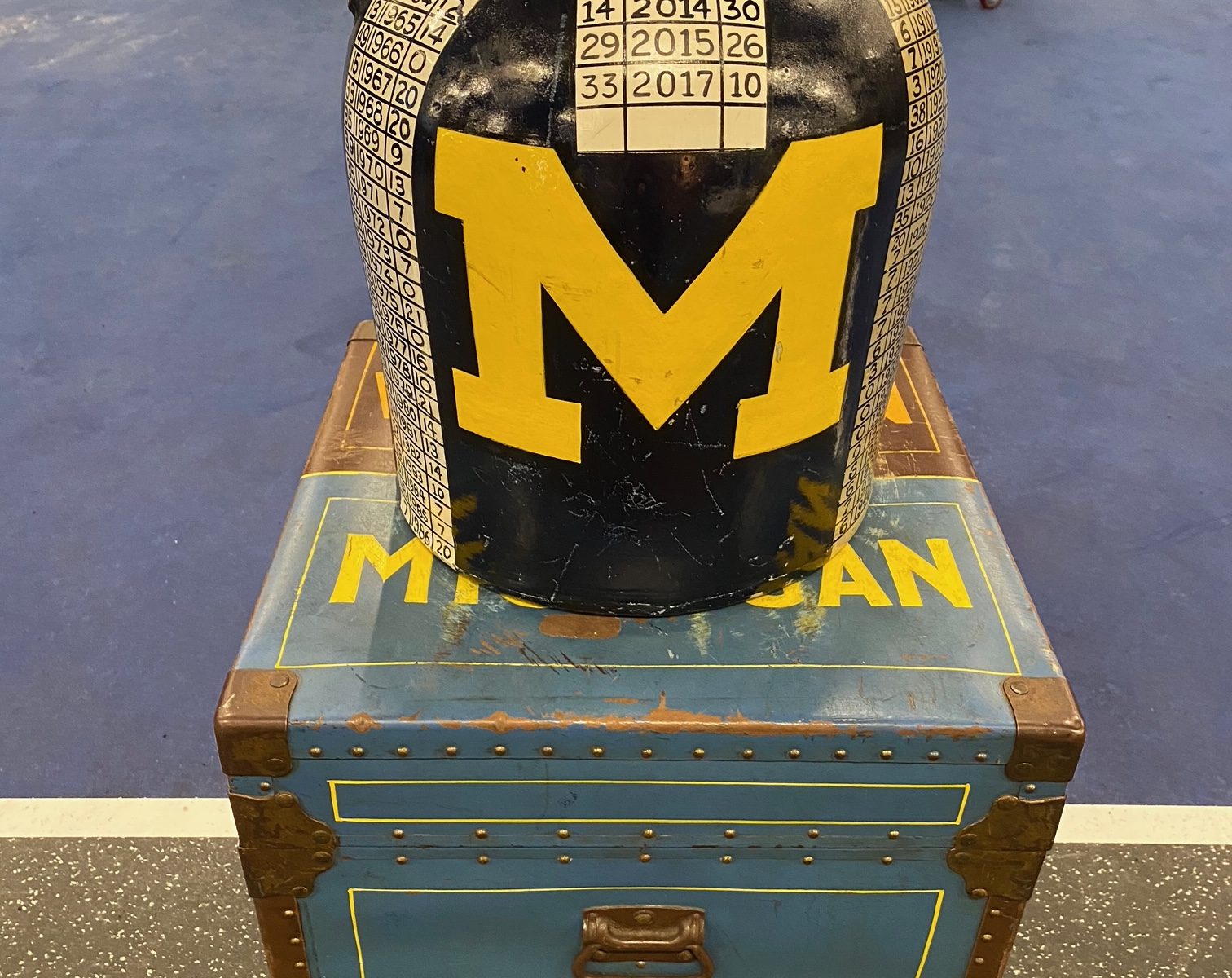
The first installment of the series focusing on the Little Brown Jug rivalry takes us back to 1998. Michigan spent much of the offseason basking in the glow of a national championship. The Wolverines had just secured two of the highest rated recruits in quarterback Drew Henson and running back Justin Fargas. As if those weren’t enough reasons to celebrate, the university had just added 5,000 seats to make Michigan Stadium the largest on-campus college football stadium in the nation. These were heady times for the Wolverines.

The Wolverines rode a 5-game winning streak into the game, but the battle for the Jug has humbled many successful teams. The game took on a traditional Big Ten style, featuring heavy doses of defense and special teams. Tom Brady gave Michigan the lead when he connected with Tai Streets for a 76-yard touchdown pass in the first quarter to put Michigan ahead, 7-3. Trevis Graham responded before the end of the quarter by recovering a Michigan punt in the end zone for touchdown. Michigan kicker Jay Feely then answered with an 18-yard field goal to send the teams in the locker room tied at 10-10.

Brady and his cohorts weren’t able to mount a scoring effort in the third quarter, so Michigan used defense to break the tie in the fourth quarter when James Hall dropped Minnesota quarterback Billy Cockerham for a safety to put the Wolverines ahead to stay. Feely then extended the lead with a 42-yard field goal, and the defense held off the Golden Gophers to secure a 15-10 victory.

Michigan completed the 1998 campaign with a 45-31 win over Arkansas in the Florida Citrus Bowl, giving the Wolverines their second consecutive 10-win season. What started out as a hangover season proved that the Wolverines still had the grit to grind out a tough win when things weren’t completely going in their favor.

Thanks to ESPN and YouTube poster College Football Historian for the attached broadcast of the game. As always, we own nothing and this blog post is provided strictly for the entertainment of readers.


This and other great content can be found at newyorkwolverine.com
𝑳𝑶𝑶𝑲𝑰𝑵𝑮 𝑩𝑨𝑪𝑲: 𝑯𝒂𝒓𝒃𝒂𝒖𝒈𝒉 𝑹𝒆𝒕𝒖𝒓𝒏𝒔

Looking Back is a Special Feature by Jeff Cummins Highlighting Key Games

The fifth installment of the series examining the first games of Michigan coaches takes us to 2015. By the end of the 2014 football season, Michigan was in desperate need of change. Once again, optimism had faded into disappointment, with even a tinge of embarrassment. The fan base clamored for a coach who could restore confidence, belief, and success.

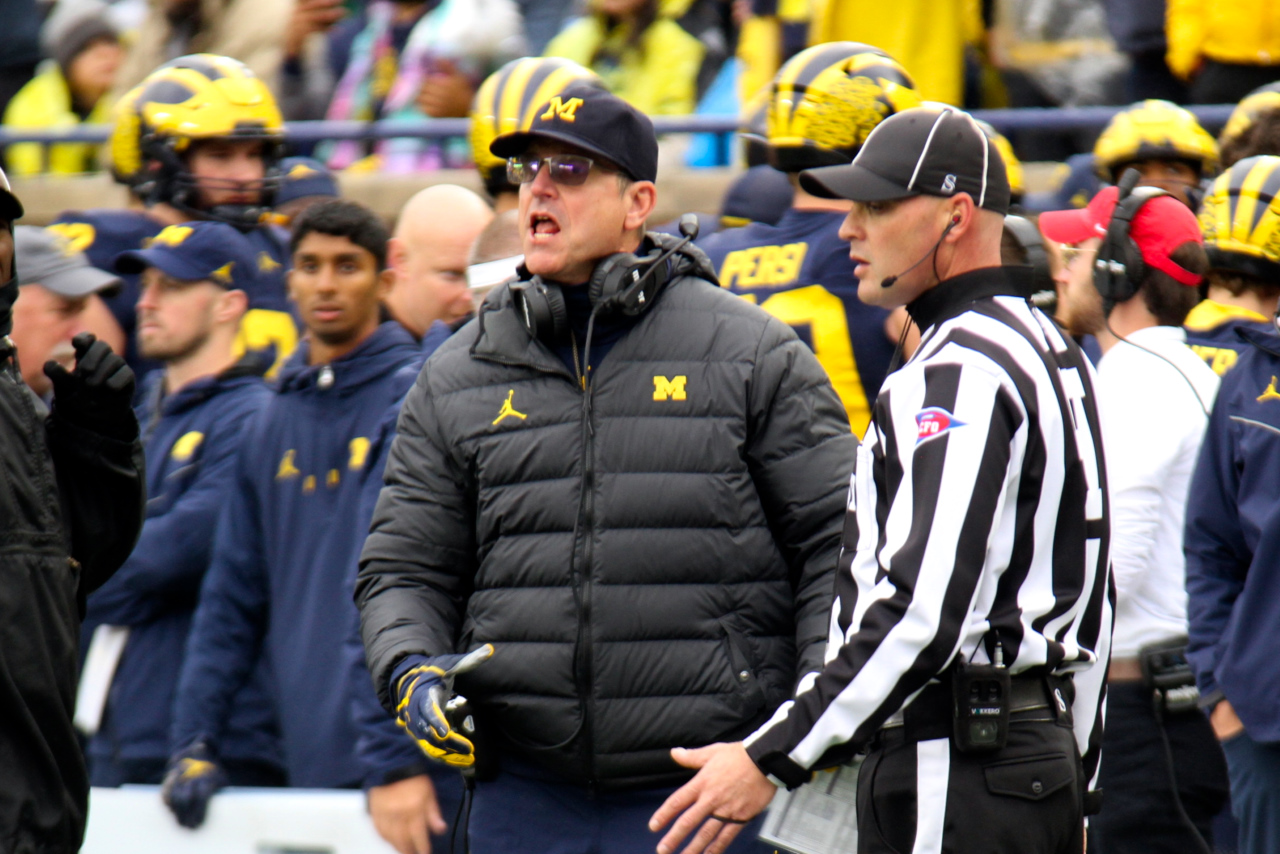
That December, a Michigan graduate close to the athletic department sent out a text to a blogger. He’d just seen a potential coach with the initials “JH” enter Schembechler Hall. On Dec. 30, 2014, Michigan hired Jim Harbaugh as the next head coach of the Michigan Wolverines. It would be an understatement to say that Harbaugh rejuvenated the fan base immediately.


Harbaugh returned to Michigan as a veritable “prodigal son.” A Michigan graduate who played for Bo Schembechler in the 1980s, Harbaugh had been critical of his alma mater on occasion. More important, he was a winner who had succeeded at the highest levels, and he brought instant credibility to the Michigan football program.

On Sept. 3, 2015, Michigan entered Rice-Eccles Stadium in Salt Lake City to begin the Jim Harbaugh era with a visit to Utah. Michigan alumni traveled to Utah in droves, and there were numerous spots of maize and blue throughout the stadium. Local news reports indicated Michigan fans had been spending a lot of money at nearby restaurants, and tipping well. The excitement around Harbaugh’s return was palpable, and even Utah residents appreciated the enthusiasm. Once the game began, Utah wasn’t so hospitable.

The Utes had an established roster, and they were able to open holes for Devontae Booker and Travis Wilson, enabling Utah to take a 17-3 lead in the third quarter. Gradually, Michigan woke up. Quarterback Jake Rudock connected with Jake Butt and Amara Darboh for a pair of touchdowns, but the Wolverines were never able to close the gap, and Utah won, 24-17.
Still, the tenacity that Michigan showed in the second half made it clear that Harbaugh was the right person to lead the Wolverines, and he eventually led them back to college football Valhalla.


Harbaugh’s counterpart, Kyle Whittingham, defeated Michigan for the third team in three attempts as Utah coach. Each time, I remember thinking “I wish that guy was on our side.” Now, he is. Tomorrow, we’ll see his first game as Michigan coach, and get a better idea where he’ll take the football program.

Thanks to Fox Sports and YouTube poster College Football Archive for the following broadcast of the 2015 Michigan game against Utah. As always, we own nothing and do not profit from this blog post in any way.


This and other great content can be found at newyorkwolverine.com
𝑳𝑶𝑶𝑲𝑰𝑵𝑮 𝑩𝑨𝑪𝑲: 𝑳𝒍𝒐𝒚𝒅 𝑪𝒂𝒓𝒓

Looking Back is a Special Feature by Jeff Cummins Highlighting Key Games

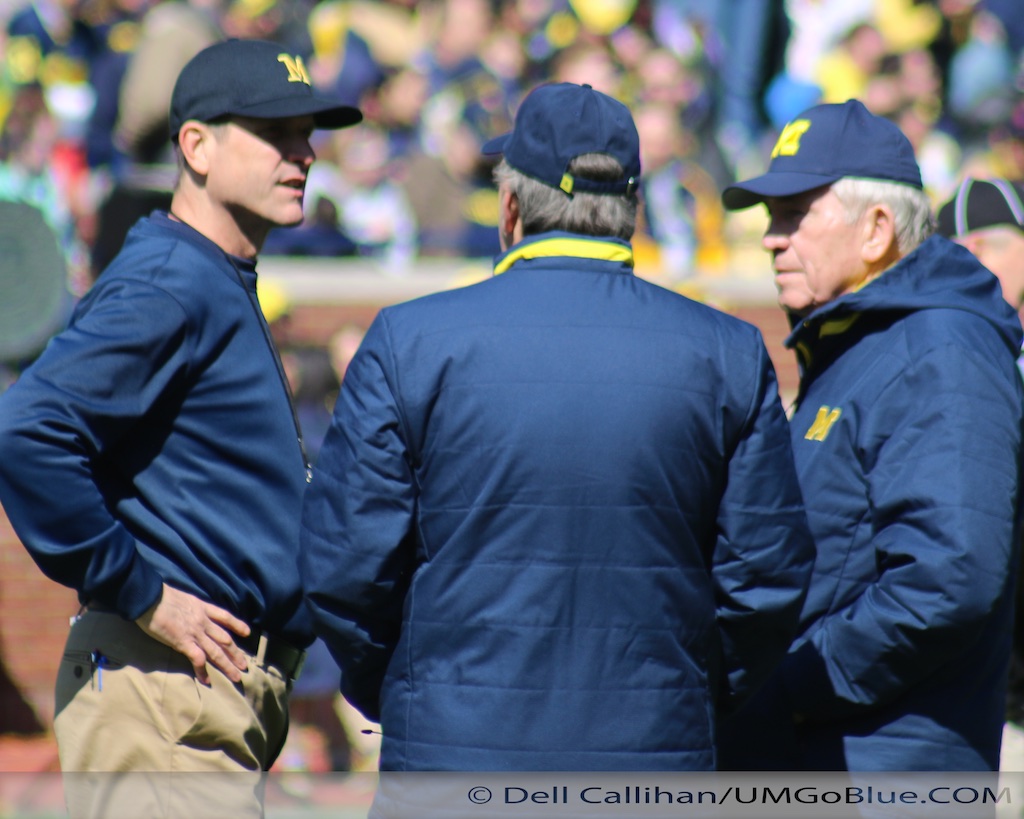
The fourth installment of this series examining the first games of Michigan coaches takes us to 1995. Before the season even began, 1995 had been a tumultuous year for Michigan. Gary Moeller resigned due to an off-field incident, and athletic director Joe Roberson hired defensive coordinator Lloyd Carr, but only on an interim basis.

Carr was thoroughly qualified to be a head coach, having served as Michigan’s defensive coordinator since 1987. In addition, Carr had been assistant head coach for the past five seasons. Nothing about the job would surprise him.

Still, the offseason left Michigan followers with an uneasy feeling, which only got worse when the Virginia Cavaliers jumped out to a 17-0 lead on a brutally hot day in the Pigskin Classic at Michigan Stadium.

Michigan followers, both fans and alumni, couldn’t be blamed for fearing the worst. Michigan was facing a large deficit in a season opener at Michigan Stadium. That’s not the sort of start that develops a lot of confidence.

Gradually, Carr’s Wolverines began to make plays, notably Mercury Hayes, who wrestled a ball away from a defensive back when the game seemed all but lost. Hayes’ tenacity ignited a spark in his teammates, who fought back with what felt like a sense of anger. Was there enough time left for them to pull off a miracle?

With time left for just one play, Michigan had the ball at Virginia’s 15-yard line. Scott Dreisbach faded back and threw a fade pass into the far corner of the north end zone. Hayes caught the ball, and managed to get one foot in bounds. Just like that, Michigan won. The only time Michigan had the lead was when time had run out. In one play, Hayes made himself a name for the ages among the Michigan faithful, and the Wolverines had won arguably the most exciting season opener in their illustrious history.

The victory also proved to be an outstanding first step for Carr’s Wolverines, and by November, the interim tag been removed from his title. Lloyd Carr was head coach of the Michigan Wolverines, and he was here to stay.

By now it’s common knowledge that Carr led the Wolverines to heights they had not achieved in decades. At the time, it required a leap of faith. After a win like that, Michigan supporters were more than happy to put a little faith in Lloyd Carr.

Thanks to ABC Sports and YouTube poster RXwolverine2 for the broadcast of this game. As always, we own nothing, and we do not profit in any way from this blog post.

https://www.youtube.com/watch?v=7NpTXz_q6mM

This and other great content can be found at newyorkwolverine.com
𝑳𝑶𝑶𝑲𝑰𝑵𝑮 𝑩𝑨𝑪𝑲: 𝑻𝒉𝒆 𝑹𝒊𝒄𝒉 𝑹𝒐𝒅𝒓𝒊𝒈𝒖𝒆𝒛 𝑬𝒙𝒑𝒆𝒓𝒊𝒎𝒆𝒏𝒕

Looking Back is a Special Feature by Jeff Cummins Highlighting Key Games

The second installment of this week’s series looking at the first games of Michigan head coaches takes us to 2008. The college football landscape was starting to change, and veteran Michigan coach Lloyd Carr had just retired. Michigan had recently hired Bill Martin as athletic director, and he was charged with fixing the financial woes of the department, among other things.

Martin also inherited the task of hiring a new coach, an exercise that turned out to be one of the most curious coaching searches in the university’s history. The name of Les Miles popped up several times, usually with dubious sources. For a few hours, it seemed Michigan found its head coach in Greg Schiano, but the Rutgers coach reconsidered and removed his name from consideration.

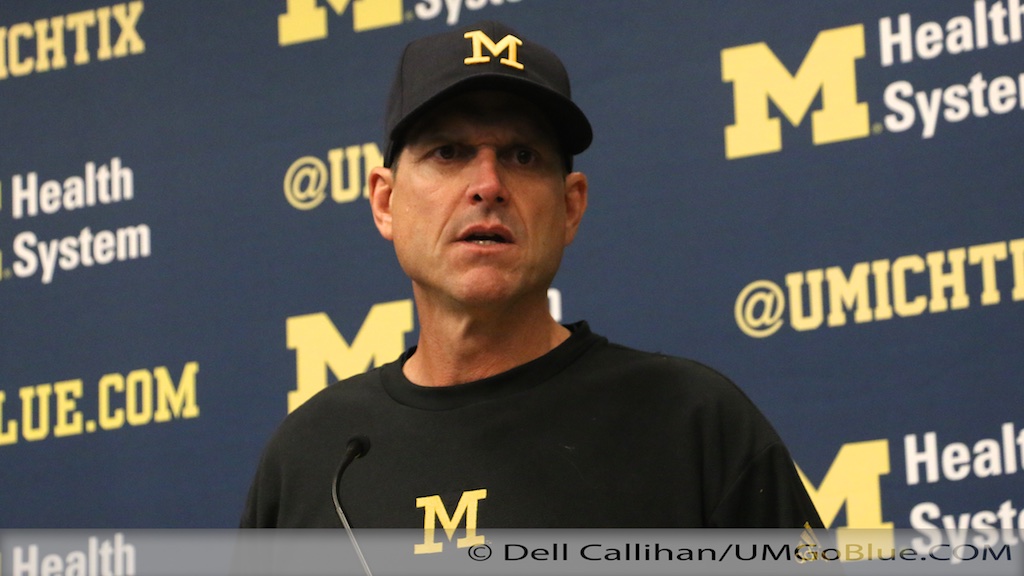
Finally, Michigan settled on West Virginia coach Rich Rodriguez, who had led several successful teams in recent years. His offensive approach favored the spread option, a strategy that Michigan defenses had found challenging to stop, at times. Defense was a different matter entirely. Rodriguez placed little focus on defense, leaving that matter to his defensive coordinator, Jeff Casteel, who chose not to join Rodriguez on the new Michigan coaching staff. Instead, Rodriguez hired Scott Shafer. Sadly, the union of Rodriguez and Shafer seemed doomed from the start.

In fact, the entire Michigan community seemed split on Rodriguez. Some welcomed a daring excursion toward what they deemed a new frontier. Others regretted the departure from many Michigan traditions. The split in the football community was punctuated by the departure of offensive lineman Justin Boren, who transferred to archrival Ohio State, a move that stunned and angered many among the Michigan faithful.

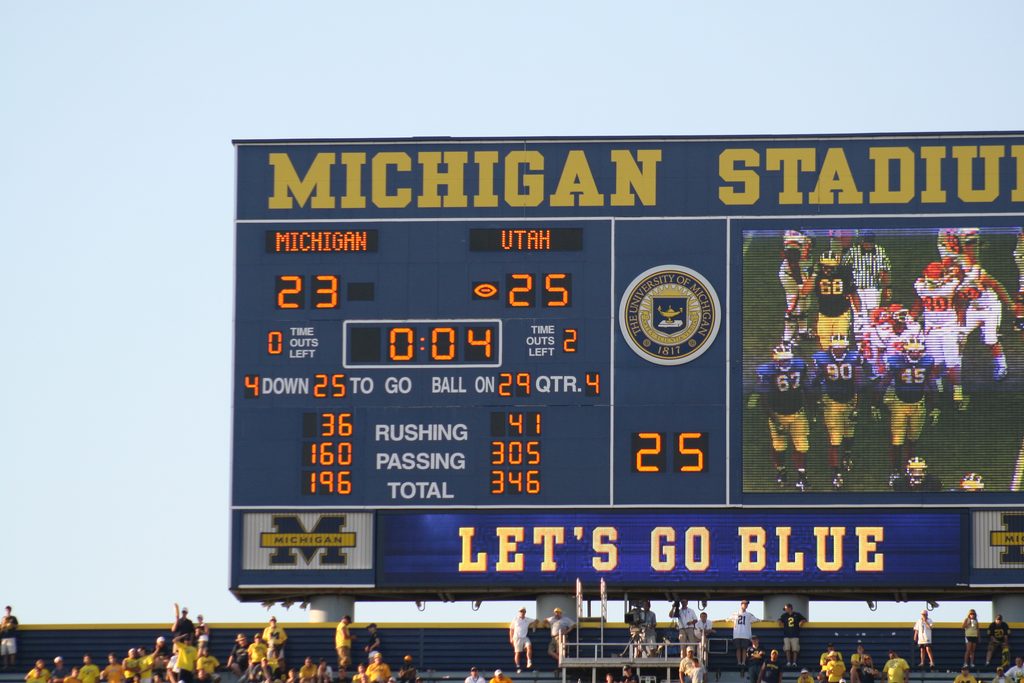
Nonetheless, on Sept. 3, 2008, with Michigan Stadium undergoing a visible expansion, the Rich Rodriguez era dawned under sunny skies, and optimism was prevalent. It didn’t last long.

Michigan’s opponent, Utah, was coached by Kyle Whittingham, now a familiar name for Michigan fans and alumni. Whittingham was Utah’s defensive coordinator when the Utes visited Michigan Stadium in 2002. On that day, Michigan won a defensive struggle against Utah. This time, the Wolverines would not be so fortunate.

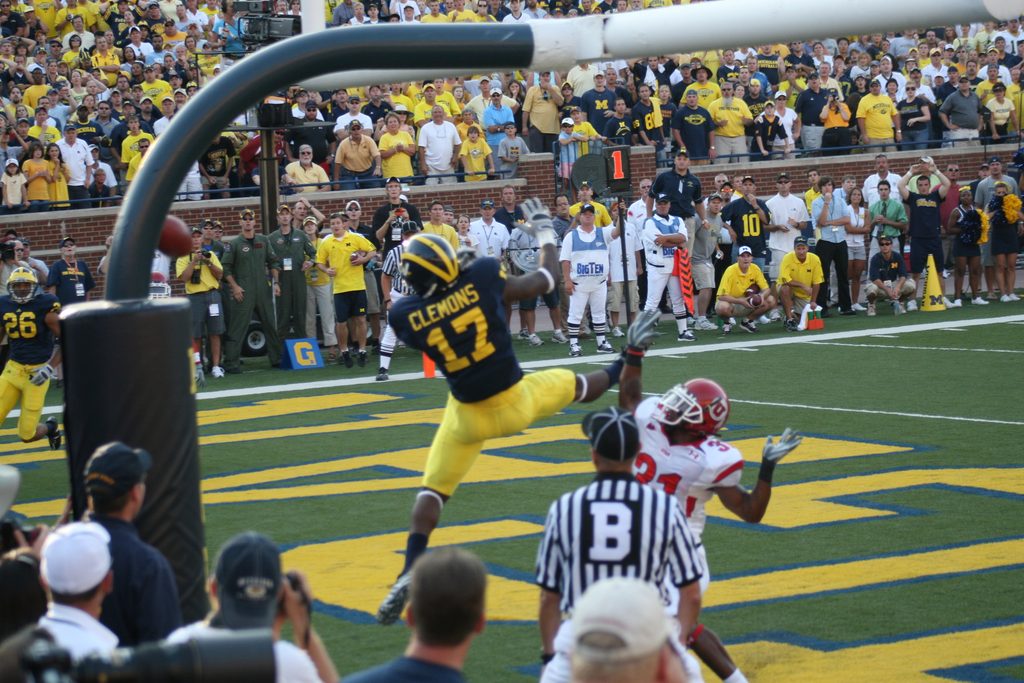
Rodriguez initially chose Nick Sheridan to run the offense, but Sheridan threw an interception into coverage, and Rodriguez insert Steven Threet into the game. Slowly, Michigan fought back. Trailing 25-10, the Wolverines got a hand on a Utah punt in the fourth quarter, giving them good field position. Then Threet found Hemingway in the corner of the south end zone, and Michigan was back in the game. Freshman running back Sam McGuffie scored on a 3-yard run, leaving Michigan behind by just two points. Needing a 2-point conversion, Threet threw to Toney Clemons in the back of the end zone, but the pass was just a little too high.

Finally, on a desperate fourth down, Threet threw to Daryl Stonum on the sideline, but again, the pass was too high, and Utah outlasted Michigan, 25-23.

Michigan’s comeback showcased the potential of the Rodriguez offense, but things never truly jelled during the Rodriguez era, which lasted just three years. Kyle Whittingham went on to lead Utah to a perfect season that year. Wouldn’t it be nice if he accomplished the same feat this year?

Thanks to ESPN and YouTube poster JJ for the attached highlight video of this game. As always, we own nothing and do not profit from this blog post in any way.

https://www.youtube.com/watch?v=PIH5CMeXzfo

As always, we own nothing and do not profit from this blog post.


This and other great content can be found at newyorkwolverine.com
THE GAME – 𝑳𝑶𝑶𝑲𝑰𝑵𝑮 𝑩𝑨𝑪𝑲: 𝑴𝑰𝑪𝑯𝑰𝑮𝑨𝑵 𝑽𝑺. 𝑶𝑯𝑰𝑶 𝑺𝑻𝑨𝑻𝑬, 2002

Looking Back is a Special Feature by Jeff Cummins Highlighting Key Rivalry Games

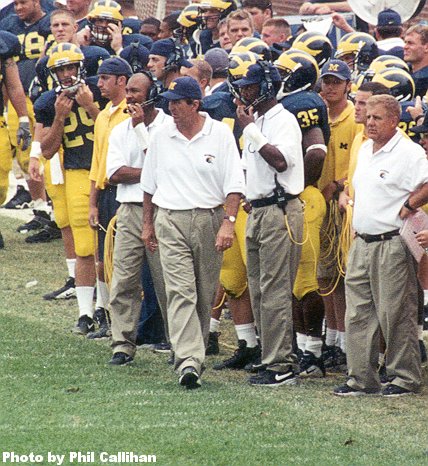
The third installment of this week’s series looking back at the football rivalry between Michigan and Ohio State takes us to 2002. Five years after Michigan’s 1997 National Championship, the landscape looked a little different. Ohio State coach Jim Tressel established the previous season that he would be a force to be reckoned with; a sobering reality for Michigan fans who had thoroughly enjoyed the rivalry during the John Cooper years.

Adam Finley provided much of the spark in the first half for Michigan. Finley’s three field goals sent the Wolverines to the locker room with a 9-7 lead at halftime.

With less than seven minutes remaining, Ohio State faced a critical 3rd down and 7 yards to go. Michigan needed just two stops to give the ball back to the Wolverine offense. Someone from Michigan had to make a big play.

Unfortunately for the Wolverines, that player was Ohio State quarterback Craig Krenzel, a native of Michigan. After gaining six yards on third down, Krenzel stretched past the first down marker, giving Ohio State a fresh set of downs. A few plays later, Krenzel pitched the ball to Maurice Hall, who ran into the corner of the end zone for the go-ahead touchdown.

But Michigan was not done. With one second left on the clock, the Wolverines were 24 yards from the end zone. All Michigan needed was one clutch play to secure the victory.

Sadly, it was not to be. Will Allen intercepted John Navarre’s pass short of the goal line, ending the game. The loss was frustrating for the Wolverines, who earned 26 first downs to just 13 for Ohio State. Unfortunately, the Wolverines were not able to complete any drives, a key point in the defeat.

A little more than a month later, the season ended on a high note for the Wolverines, as the offense found the warm Florida sun to its liking. Michigan topped the Florida Gators, 38-30, securing the Wolverines’ 10th win of the season. The following season would bring new opportunities—and new glory— for Michigan.

This and other great content can be found at newyorkwolverine.com