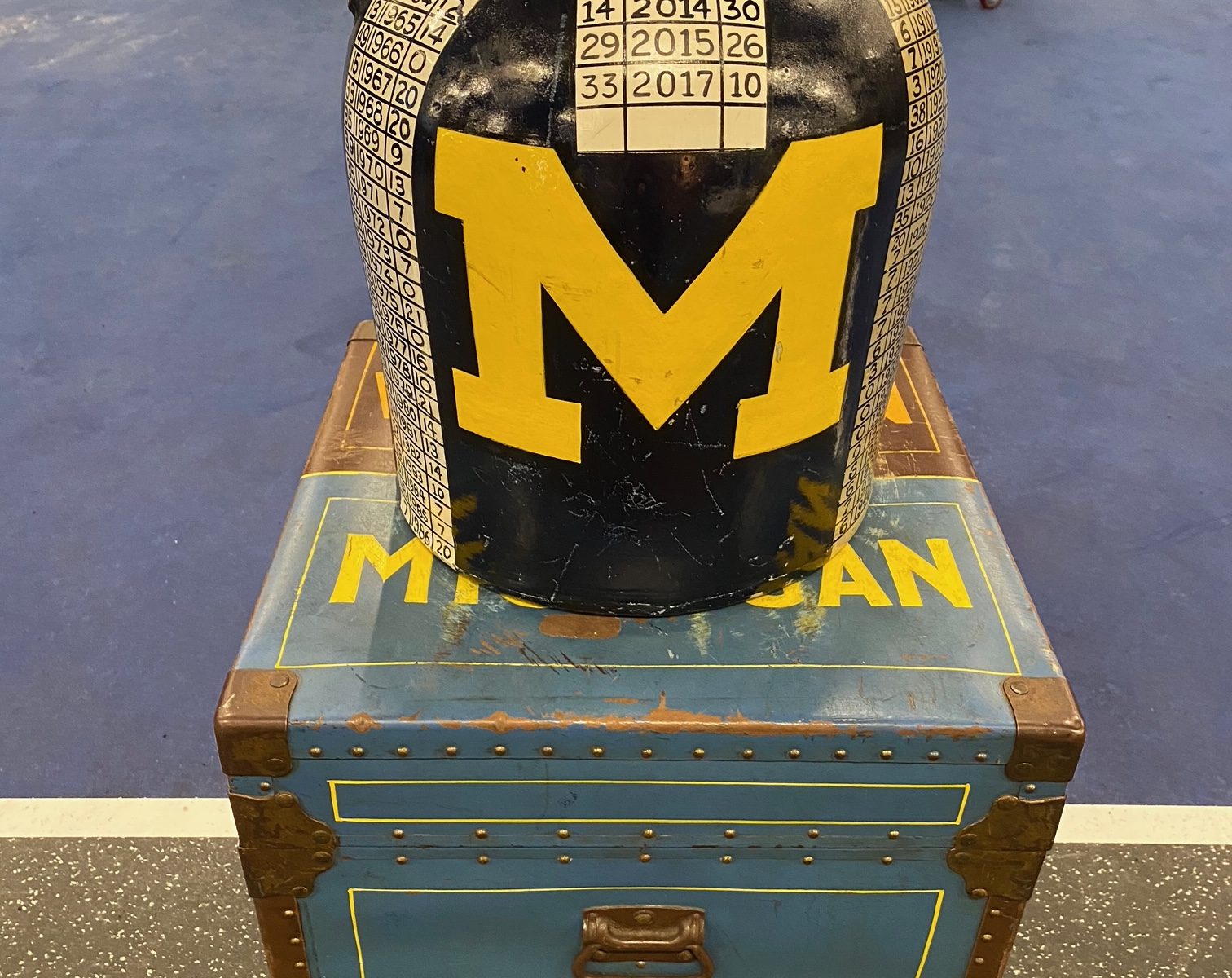
THE GAME – 𝑳𝑶𝑶𝑲𝑰𝑵𝑮 𝑩𝑨𝑪𝑲: 𝑴𝑰𝑪𝑯𝑰𝑮𝑨𝑵 𝑽𝑺. 𝑶𝑯𝑰𝑶 𝑺𝑻𝑨𝑻𝑬, 1989

Looking Back is a Special Feature by Jeff Cummins Highlighting Key Rivalry Games

The fifth and final installment of this week’s series looking back at the football rivalry between Michigan and Ohio State takes us back to 1989. The 1980s were heady economic times in the United States, and the world looked on as the Berlin Wall was knocked down. Changes were starting to accelerate, but in the Big Ten, Michigan used an old school philosophy, and it proved to be just as effective as ever.

Ohio State entered Michigan Stadium with a new coach in 1989. John Cooper was an outsider, born and raised in Tennessee. He began to recruit many speedy athletes to the Buckeyes, a slight change in Ohio State’s offensive attack. By contrast, Bo Schembechler, in his final year at Michigan, still believed in two running backs, using both the pro set and the I-formation. Early in the game, Michigan was allowing Ohio State to hang around a little too long. That’s when Bo put the game on the backs of his offensive line. Few drives in Bo’s 21-year tenure screamed “Michigan football” like the drive that started at the Wolverines’ 19 yard line midway through the second quarter. It began with Leroy Hoard knocking several Buckeyes on their rear ends as he bulled his way for a 16-yard gain on first down, and ended when running back Allen Jefferson, lined up as part of a full house backfield, took the ball two yards around left end for the touchdown. Michigan drove 81 yards on 13 plays, with not one passing play in the lot. There was no emphasis on speed in the open field; this drive was simply about old fashioned blocking, and the Wolverines used massive maulers like left tackle Tom Dohring and guard/center Steve Everett, one of the most spirited Wolverines of all time. The final score was 28-18, Michigan, but the tenor of the game was determined on that 81-yard drive, which gave the Wolverines a two-score lead and established how the game was going to unfold.

The 1989 iteration of The Game was Schembechler’s last; he retired after the season. But there was little concern for the future of the program, because both offensive coordinator Gary Moeller, who took the head coaching job in 1990; and defensive coordinator Lloyd Carr, who took the head coaching job several years after that, were accomplished coaches. Fans enjoyed the Big Ten championship that Michigan won in 1989, but few could have imagined what the team would accomplish eight years later.

This and other great content can be found at newyorkwolverine.com

THE GAME – 𝑳𝑶𝑶𝑲𝑰𝑵𝑮 𝑩𝑨𝑪𝑲: 𝑴𝑰𝑪𝑯𝑰𝑮𝑨𝑵 𝑽𝑺. 𝑶𝑯𝑰𝑶 𝑺𝑻𝑨𝑻𝑬, 1980

Looking Back is a Special Feature by Jeff Cummins Highlighting Key Rivalry Games

9-3. The mere mention of that score brings smiles to the faces of Wolverines everywhere, as they remember the legendary “Snow Bowl” in 1950.

But no, this isn’t about that game.

The fourth installment of this year’s series looking back at the football rivalry between Michigan and Ohio State takes us back 1980, thirty years after the Snow Bowl. By this time, Ronald Reagan was the president of the United States, the automobile industry that fueled the midwest for decades had changed significantly, and American society was undergoing massive changes. Some new things were occurring, and in some instances, old things were being revived.

One thing that never needed revival was the rivalry between Michigan and Ohio State. In 1980, both teams entered “The Game” with perfect records in the Big Ten and the conference title on the line, as it has been on many occasions. With both teams playing stingy defense, every possession would be critical. Michigan coach Bo Schembechler was acutely aware of this fact, and he designed a game plan that featured a lot of running, with backs Lawrence Ricks, Stan Edwards and Butch Woolfolk repeatedly probing the Ohio State forward wall, secure in the knowledge that if the Buckeyes overcommitted to stopping the run, Michigan receiver Anthony Carter had the speed to make them regret that choice.

Nonetheless, Ohio State grabbed the early lead when Vlade Janakievski kicked a 33-yard field goal to put the Buekeyes up, 3-0. The Wolverines didn’t take long to respond, though. With their backs repeatedly pounding the Ohio State defensive line, the Wolverines drove into Ohio State territory, where Ali Haji-Sheikh kicked a 43-yard field goal to send the teams to their lockers at halftime with the score tied, 3-3.

Michigan used the same game plan in the second half, and when the Wolverines drove to the Ohio State 13-yard line, John Wangler connected with Carter in the end zone to give Michigan a 9-3 lead.

With a one score lead, Michigan appeared poised to take firm control of the game when Stan Edwwards threw an option pass into the Ohio State end zone. However, the Bucheyes were ready, and they intercepted the pass, thwarting Michigan’s threat.

Ohio State had one final chance, on a 4th down and 25 yards to go from the Michigan 47-yard line. Buckeye QB Art Schlichter faded back to pass, but he never saw Robert Thompson, who hit Schlichter right in the chest and drove him to the ground, securing Michigan’s win.

The victory sent the Wolverines to the Rose Bowl, where they routed Washington, 23-6. The 1980 team was marked by a dominant defense, which produced one of the best efforts by a Michigan defense at Ohio Stadium in the last 60 years.

This and other great content can be found at newyorkwolverine.com
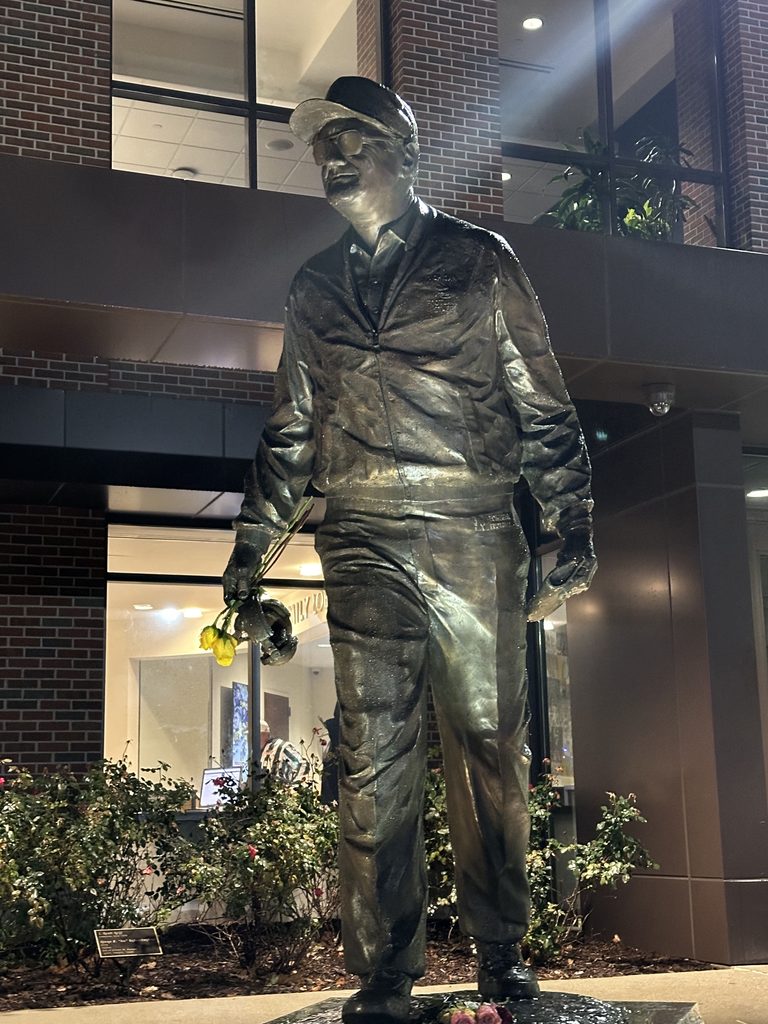
THE GAME – 𝑳𝑶𝑶𝑲𝑰𝑵𝑮 𝑩𝑨𝑪𝑲: 𝑴𝑰𝑪𝑯𝑰𝑮𝑨𝑵 𝑽𝑺. 𝑶𝑯𝑰𝑶 𝑺𝑻𝑨𝑻𝑬, 1978

Looking Back is a Special Feature by Jeff Cummins Highlighting Key Rivalry Games

The second installment of this year’s series looking back at the football rivalry between Michigan and Ohio State takes us back to 1978. Israeli Prime Minister Menachem Begin and Egyptian President Anwar Sadat signed the Camp David Accords. Resorts International Casino opened in Atlantic City, N.J., the first casino to open on the East Coast.

In college football, Michigan was in the 10th season of coach Bo Schembechler’s tenure, and he had the Wolverines firing on all cylinders. Senior quarterback Rick Leach directed Michigan’s option offense, and opposing defenses had their hands full every game. If defenses concentrated too much on Leach, running backs Harlan Huckleby and Russell Davis were poised to strike, as were receiver Rodney Feaster and tight end Doug Marsh. On defense, junior linebacker Ron Simpkins spearheaded an attacking group of players who swarmed to the ball. In the simplest of terms, the 1978 Wolverines had very few weaknesses.

Ohio State started the season slowly, but the Buckeyes reeled off five consecutive victories heading into “The Game,” giving them plenty of momentum. Even more worrisome for the Wolverines, the game would be played at Ohio Stadium; always a daunting venue for Michigan.

There was even more reason for concern when a Bob Atha field goal gave Ohio State a 3-0 lead in the first quarter. The Wolverines maintained their composure and responded with a dominant drive that covered 70 yards in just four plays. Leach culminated the scoring drive by connecting with Feaster for a 30-yard touchdown pass. After Ohio State took the lead, Michigan responded little more than a minute later. The Wolverines extended their lead in the third quarter when junior tailback Roosevelt Smith caught an 11-yard scoring pass to give Michigan a 14-3 lead. From that point, Michigan’s defense took control of the game. It was a rare when a Bo Schembechler-era Michigan defense surrendered a double-digit lead. This game marked the third consecutive contest vs Ohio State where the Buckeyes failed to score a touchdown vs Michigan, a point that wasn’t lost on Ohio State coach Woody Hayes, who greeted a reporter angrily when he was questioned about the streak after the game. Including the 1978 game, Michigan had surrendered only nine points to Ohio State over the last three meetings between the two rivals.

The win also marked Michigan’s third consecutive triumph in the series, and enabled Michigan to claim a share of the Big Ten championship.

This and other great content can be found at newyorkwolverine.com

Michigan vs Alabama – Looking Back – 1988

Looking Back is a Special Feature by Jeff Cummins Highlighting Key Rivalry Games

The first installment of the series looking back at football games between Michigan and Alabama takes us back to the Hall of Fame Bowl on January 2, 1988. The 1987 season was a disappointment for Michigan, featuring losses to Ohio State, Notre Dame, Michigan State and Indiana. Bo Schembechler was in the twillight of his coaching career at Michigan, and he underwent cardiac bypass surgery after the regular season ended. Gary Moeller took over the reins as Michigan’s head coach for the game, providing a a preview of what was in store for the next few years.

The game began like so many Michigan games had started under Schembechler. Jamie Morris scored three touchdowns to vault Michigan to a 21-3 lead, but Alabama wasn’t done. First, quarterback Jeff Dunn connected with tight end Howard Cross for Alabama’s first touchdown. Bobby Humphrery then tacked on a couple of touchdown runs to give the Crimson Tide a 3-point lead in the fourth quarter.

With 3:42 remaining in the game, Michigan started its final drive of the game with three timeouts in hand. Demetrius Brown led the offense to the line of scrimmage, and for one final offensive series, the Wolverines showcased all their talents. Morris probed the Alabama defensive line for a short gain, then Brown connected with receiver Greg McMurtry, who weaved his way between defenders for a 31-yard gain to the Alabama 27-yard line. Brown was stopped short of the first down marker on an option play, leaving the Wolverines with a critical fourth down.

Moeller gave the Wolverine faithful a glimps of what was to come under his leadership when he instructed Brown to throw the ball on fourth down. Facing a heavy pass rush, Brown threw a desperate pass into the corner of the end zone, where John Kolesar outmaneuvered a cornerback to come down with the ball for the decisive touchdown. David Arnold then capped a marvelous performance by the Michigan defense when he intercepted a pass on the final play to seal a 28-24 victory for the Wolverines.

The 1987 season will be remembered for many fits and starts by the Wolverines, but for one glorious afternoon, Morris, Brown, Kolesar, McMurtry, Arnold, Jumbo Elliott and the rest of the Michigan team put it all together and showed the college football world their true capabilities.

Many thanks to NBC Sports, YouTube, and YouTube poster College Football Historian for the broadcast of this game. As always, we own nothing and this blog post is intended strictly for the enjoyment of readers.

THE GAME – Michigan vs Ohio State Football – Looking Back – 1989

Looking Back is a Special Feature by Jeff Cummins Highlighting Key Rivalry Games

The third installment in the series looking back at the football rivalry between Michigan and Ohio State takes us to 1989. Bo Schembechler was in his 21st and final season as Michigan’s head coach, and it seemed like the right time for him to move on. Schembechler had accomplished a lot in two decades, and the program was on solid ground. Changes were coming to college football, but for the moment, Bo’s brand of football was still effective.

On the other side of the field, Ohio State coach John Cooper was starting to assemble a roster filled with cream-of-the-crop talent. On paper, the teams matched up pretty well. Ohio State had Alonzo Spellman on the defensive line, Greg Frey playing quarterback, Jeff Graham playing receiver, and Scottie Graham playing running back. Michigan countered with Chris Calloway and Derrick Alexander playing wide receiver positions, Tony Boles, Jarrod Bunch, and Leroy Hoard running the ball, Tripp Welborne playing safety, and a young phenom named Desmond Howard, who would make an impact over the next few years.

The difference in the game was Michigan’s ability to run the ball, which allowed the Wolverines to control the game at critical junctures. Michigan jumped out to a 14-0 lead, featuring a 13-play, 81-yard scoring drive in the second quarter. Nonetheless, Ohio State fought back, and Scottie Graham closed the Buckeyes’ deficit to three points on a 4-yard run in the fourth quarter. With the game on the line, Schembechler went back to his roots and put his faith in the Michigan offensive line, which paved the way for a 23-yard touchdown run by Jarrod Bunch to give the Wolverines a 28-18 win. Michigan finished the season with an 8-0 record in the Big Ten, giving Schembechler a conference championship in his final season.

Thanks to YouTube, ABC, and YouTube poster Rxwolverine for the video of this game. We own nothing and this content is provided strictly for the enjoyment of readers.