๐‘ณ๐‘ถ๐‘ถ๐‘ฒ๐‘ฐ๐‘ต๐‘ฎ ๐‘ฉ๐‘จ๐‘ช๐‘ฒ: ๐‘ด๐‘ฐ๐‘ช๐‘ฏ๐‘ฐ๐‘ฎ๐‘จ๐‘ต ๐‘ฝ๐‘บ. ๐‘ด๐‘ฐ๐‘ช๐‘ฏ๐‘ฐ๐‘ฎ๐‘จ๐‘ต ๐‘บ๐‘ป๐‘จ๐‘ป๐‘ฌ, 1968

Looking Back is a Special Feature by Jeff Cummins Highlighting Key Rivalry Games
๐‘จย ๐‘ญ๐’Š๐’๐’‚๐’ย ๐‘ฝ๐’Š๐’„๐’•๐’๐’“๐’šย ๐‘ถ๐’—๐’†๐’“ย ๐‘ด๐‘บ๐‘ผย ๐’‡๐’๐’“ย ๐‘ฉ๐’–๐’Ž๐’‘

The fourth installment of this series examining the football rivalry between Michigan and Michigan State takes us to 1968. The offseason had been rough for Michigan coach Bump Elliott, who endured intense criticism from alumni following a 4-6 season in 1967. Quietly, the Wolverines had assembled quite a roster for the 1968 campaign, but that did little to ease the criticism.ย 

Michigan entered the game against Michigan State with a 2-1 record. Making matters worse, the Spartans had defeated Michigan for three years in a row, and most pundits expected that streak to continue. Itโ€™s fair to say that Elliott was feeling some pressure before that game. 

But on one, glorious fall afternoon, the Michigan Wolverines gave outgoing coach Bump Elliott a day to remember, one that recalled times when Michigan was one of the elite powers of college football. For three hours on a Saturday in October, 1968, the Wolverines recalled the memories of previous years, and sent Bump out with a final victory over the Spartans. 

The game definitely had some drama. In the fourth quarter, Michigan State seized the lead when Charles Wedemeyer connected with Frank Foreman on a 2-point conversion to give the Spartans a 14-13 lead. The Michigan State defense was converging on Michigan quarterback Dennis Brown when Brown found tight end Jim Mandich along the Michigan sideline for the turning point of the game. Mandich made the catch and outraced everyone to the south end zone of Michigan Stadium for a 53-yard touchdown that put the Wolverines ahead to stay, as Michigan topped Michigan State, 28-14. 

Elliott chose to resign after the 1968 season. Heโ€™s remembered mostly for losing his final game to Ohio State, 50-14, but thatโ€™s not the most fair assessment of his tenure. In 1964, he led a Michigan squad that went 10-1, won the Big Ten championship and the Rose Bowl, and was just a failed 2-point conversion from a perfect season and a likely National Championship. Thatโ€™s certainly worthy of note. 

Thanks to YouTube and YouTube poster College Football Historian for this highlight film of the game, which has no sound. As always, we own nothing, and this blog post is provided strictly for the enjoyment of readers. 

This and other great content can be found at newyorkwolverine.com
๐‘ณ๐‘ถ๐‘ถ๐‘ฒ๐‘ฐ๐‘ต๐‘ฎ ๐‘ฉ๐‘จ๐‘ช๐‘ฒ: ๐‘ด๐‘ฐ๐‘ช๐‘ฏ๐‘ฐ๐‘ฎ๐‘จ๐‘ต ๐‘ฝ๐‘บ. ๐‘ด๐‘ฐ๐‘ช๐‘ฏ๐‘ฐ๐‘ฎ๐‘จ๐‘ต ๐‘บ๐‘ป๐‘จ๐‘ป๐‘ฌ, 2006

Looking Back is a Special Feature by Jeff Cummins Highlighting Key Rivalry Games
V๐’Š๐’๐’•๐’‚๐’ˆ๐’† ๐‘ด๐’Š๐’„๐’‰๐’Š๐’ˆ๐’‚๐’ ๐‘ซ๐’๐’Ž๐’Š๐’๐’‚๐’๐’„๐’†

The third installment of this series examining the football rivalry between Michigan and Michigan State takes us to 2006. In a series thatโ€™s known for controversy, the only controversial play in the 2006 game served as little more than a footnote to the theme of the game. 

The play in question was a touchdown pass from Michigan quarterback Chad Henne to Adrian Arrington. In all honesty, it appeared that Arrington landed out of bounds before he hit the end zone, but anyone who watched the game would have been hard pressed to argue that play might have altered the gameโ€™s outcome. 

The game pitted the modern spread-option offense of Michigan State coach John L. Smith vs. the pro-style offense favored by Michigan coach Lloyd Carr. The Wolverines approached the game with a workman-line seriousness of purpose. They controlled the game by running Mike Hart behind a dominant offensive line that buckled their chin straps on every play and opened gaping holes with ease. The result was a game that played directly to Michiganโ€™s strengths, as the Wolverines used a suffocating defense that limited Michigan Stateโ€™s offensive threats. The Spartans were repeatedly forced to punt after three plays, while the Michigan offensive line made running easy for Hart. The beauty of the Wolverinesโ€™ approach was that it placed the Michigan State defense between a rock and a hard place. The Spartans could commit to stopping the run, which would leave receivers like Arrington, Mario Manningham and Steve Breaston running free in the secondary, or play a more cautious defense, which would provide minimal support to stopping Mike Hart. Virtually everything Michigan tried worked. Early in the second quarter, Manningham beat double coverage and Henne connected with him in the end zone to extend Michiganโ€™s lead to 14-0. By halftime, the Wolverines led 17-0, and it was all over but the shouting. 

Michigan State fought back in the second half, with rushing touchdowns from running back Jehuu Caulcrick and quarterback Drew Stanton, but it was strictly a formality by that time. The Wolverines established their superiority early, and cruised to a 31-13 victory in the type of game that would put a smile on Bo Schembechlerโ€™s face. 

Thanks to YouTube, ESPN, Michigan Replay and YouTube poster College Football Historian for the attached broadcast of this game. As always, we own nothing, and this blog post is provided strictly for the enjoyment of readers. 

This and other great content can be found at newyorkwolverine.com

๐‘ณ๐‘ถ๐‘ถ๐‘ฒ๐‘ฐ๐‘ต๐‘ฎ ๐‘ฉ๐‘จ๐‘ช๐‘ฒ: ๐‘ด๐‘ฐ๐‘ช๐‘ฏ๐‘ฐ๐‘ฎ๐‘จ๐‘ต ๐‘ฝ๐‘บ. ๐‘ด๐‘ฐ๐‘ช๐‘ฏ๐‘ฐ๐‘ฎ๐‘จ๐‘ต ๐‘บ๐‘ป๐‘จ๐‘ป๐‘ฌ, 2012

Looking Back is a Special Feature by Jeff Cummins Highlighting Key Rivalry Games

The second installment of the series examining the football rivalry between Michigan and Michigan State takes us to 2012. During the previous season, Michigan football experienced a complete restoration of pride under new head coach Brady Hoke. The Wolverines defeated many opponents, and even won the Sugar Bowl. By 2012, alumni began arriving at their tailgate parties earlier and staying longer. Yes, it certainly was great to be a Michigan Wolverine!

But as the warm glow of the tailgate party faded, there was one nagging irritation: Michigan had lost to Michigan State in 2011, and the Wolverines hadnโ€™t beaten the Spartans since 2007. Situations like that are simply intolerable. 

So as the teams took the field for the 105th meeting in the rivalry, the stage was set for an instant classic. The rivalry between Michigan and Michigan State has featured some of the hardest hits in college football history, and the 2012 game would be one of the most physically brutal contests in the history of the rivalry. In a series that has featured Bubba Smith and LaMarr Woodley, Tony Mandarich and Steve Hutchinson, the 2012 game would become a classic for the ages, as Michigan offensive tackle Taylor Lewan and Michigan State defensive end William Gholston put on a legendary battle. 

In the first quarter, Michigan quarterback connected with Jeremy Gallon, easily one of the most underrated receivers in Michigan history, and Gallon zigged and zagged for a 22-yard gain. As the game unfolded, it was clear that play was an aberration. Tough defense ruled the game, and both offenses had trouble moving the ball. In the second quarter, Michigan running back Fitz Toussaint carried the ball 38 yards to the Michigan State 6-yard line, giving the Wolverines their first good scoring opportunity. Four plays later, Brendan Gibbons kicked a 24-yard field goal to give Michigan a 3-0 lead. Later in the half, Matt Wile extended the Wolverinesโ€™ lead with a 48-yard field goal. Michigan had the lead, but it would be a long time before the Wolverines could breathe easily.

Michigan State gradually began to seize the momentum in the third quarter. Andrew Maxwell connected with Paul Lang in the north end zone for a touchdown, and suddenly the Spartans had the lead, 7-6. The teams traded field goals, and with two minutes remaining, the Wolverines had a first down at their own 38-yard line. Time for just one final offensive series. With time winding down, Robinson completed a 19-yard pass to Drew Dileo, who reached the Michigan State 22-yard line. Gibbons then kicked a field goal that narrowly went through the uprights, and Michigan won, 12-10, in one of the most intense games in the history of the series.

Michigan’s season ended in disappointing fashion, but on this day, the Wolverines settled an old score with the Spartans.

Thanks to YouTube, the Big Ten Network, and YouTube poster WolverineDevotee for the attached video. As always, we own nothing and this blog post is provided strictly for the enjoyment of readers.

This and other great content can be found at newyorkwolverine.com

๐‘ณ๐‘ถ๐‘ถ๐‘ฒ๐‘ฐ๐‘ต๐‘ฎ ๐‘ฉ๐‘จ๐‘ช๐‘ฒ: ๐‘ด๐‘ฐ๐‘ช๐‘ฏ๐‘ฐ๐‘ฎ๐‘จ๐‘ต ๐‘ฝ๐‘บ. ๐‘ด๐‘ฐ๐‘ช๐‘ฏ๐‘ฐ๐‘ฎ๐‘จ๐‘ต ๐‘บ๐‘ป๐‘จ๐‘ป๐‘ฌ, 1969

Looking Back is a Special Feature by Jeff Cummins Highlighting Key Rivalry Games

LOOKING BACK: Bo Meets the Spartans for the first time

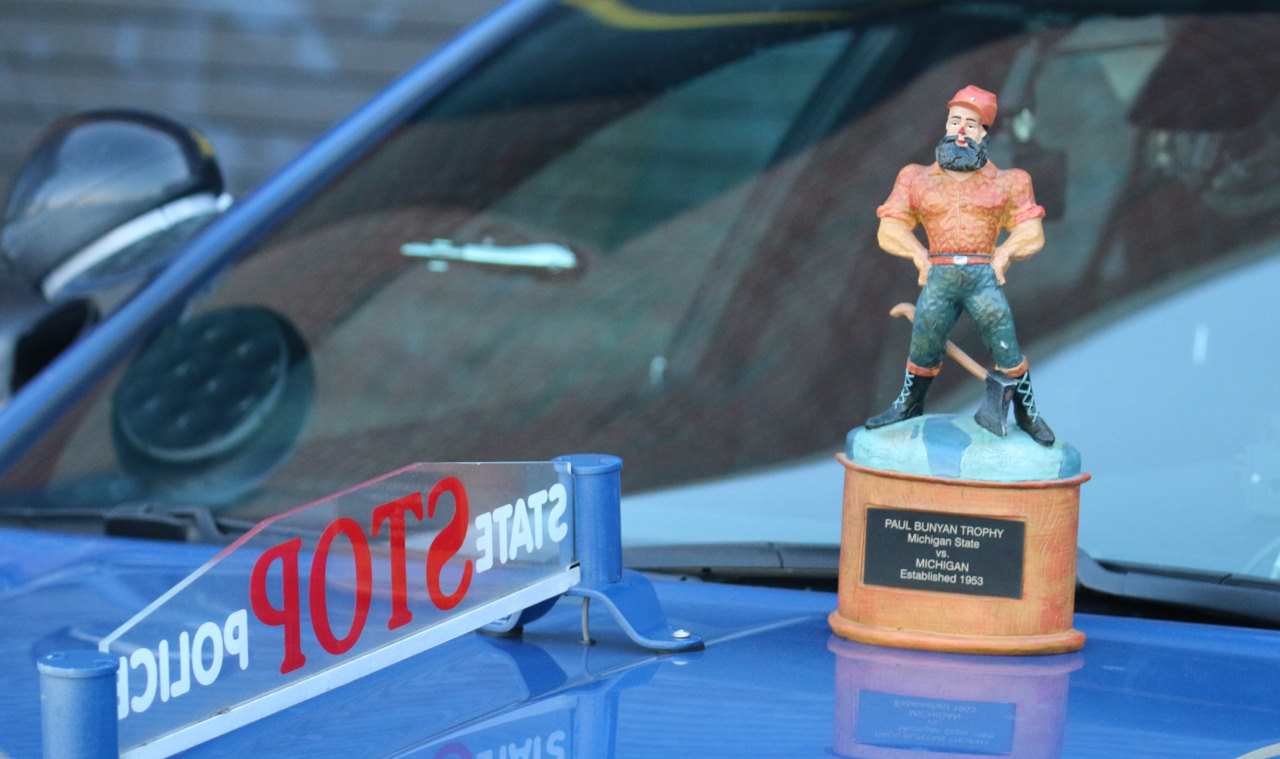
The first installment of this series looking back at the football rivalry between Michigan and Michigan State takes us to 1969. The late 1960s brought change and upheaval, but the battle for the Paul Bunyan Trophy resists change, and offers little in the way of comfort to newcomers. 

First-year coach Bo Schembechler brought his Michigan team to East Lansing for the annual meeting with Michigan State on Oct. 18, 1969. Schembechlerโ€™s Wolverines entered the game with a 3-1 record, and it certainly looked as if they were building something promising. Michigan State, on the other hand, had just dropped two games, and the Spartans desperately needed a win over Michigan to salvage their season. Sometimes, that desperation produces a hunger that fuels great performances. 

Tim Killian kicked a 29-yard field goal to give the Wolverines a 3-0 lead in the second quarter, but the advantage didn’t last long. Michigan State received the ensuing kickoff and began to run the ball right into the middle of the line. The relentless pounding eventually numbed the Michigan defense with the efficiency of novocain, allowing the Spartans to control the tone of the game. After several minutes, running back Don Highsmith steamrolled Marty Huff into the end zone, and the Spartans took the lead for good. After Michigan State recovered a fumble on Michiganโ€™s next possession, quarterback Bill Triplett rolled out and scored on a 10-yard run, and the Spartans never looked back en route to a 23-12 victory. Michigan went on to accomplish great things during the 1969 season, but for Michigan State, this was the crowning achievement of the Spartansโ€™ season. Michigan coach Bo Schembechler walked away with a defeat after his first encounter with the Spartans, but he gained a better understanding of the intrastate rivalry, which would pay dividends for the Wolverines in years to come. 

Thanks to YouTube and YouTube poster Jess Chabot for the video of this game. As always, we own nothing, and this is provided strictly for the enjoyment of readers. 

This and other great content can be found at newyorkwolverine.com

๐‘ณ๐‘ถ๐‘ถ๐‘ฒ๐‘ฐ๐‘ต๐‘ฎ ๐‘ฉ๐‘จ๐‘ช๐‘ฒ: 2015

Looking Back is a Special Feature by Jeff Cummins Highlighting Key Games

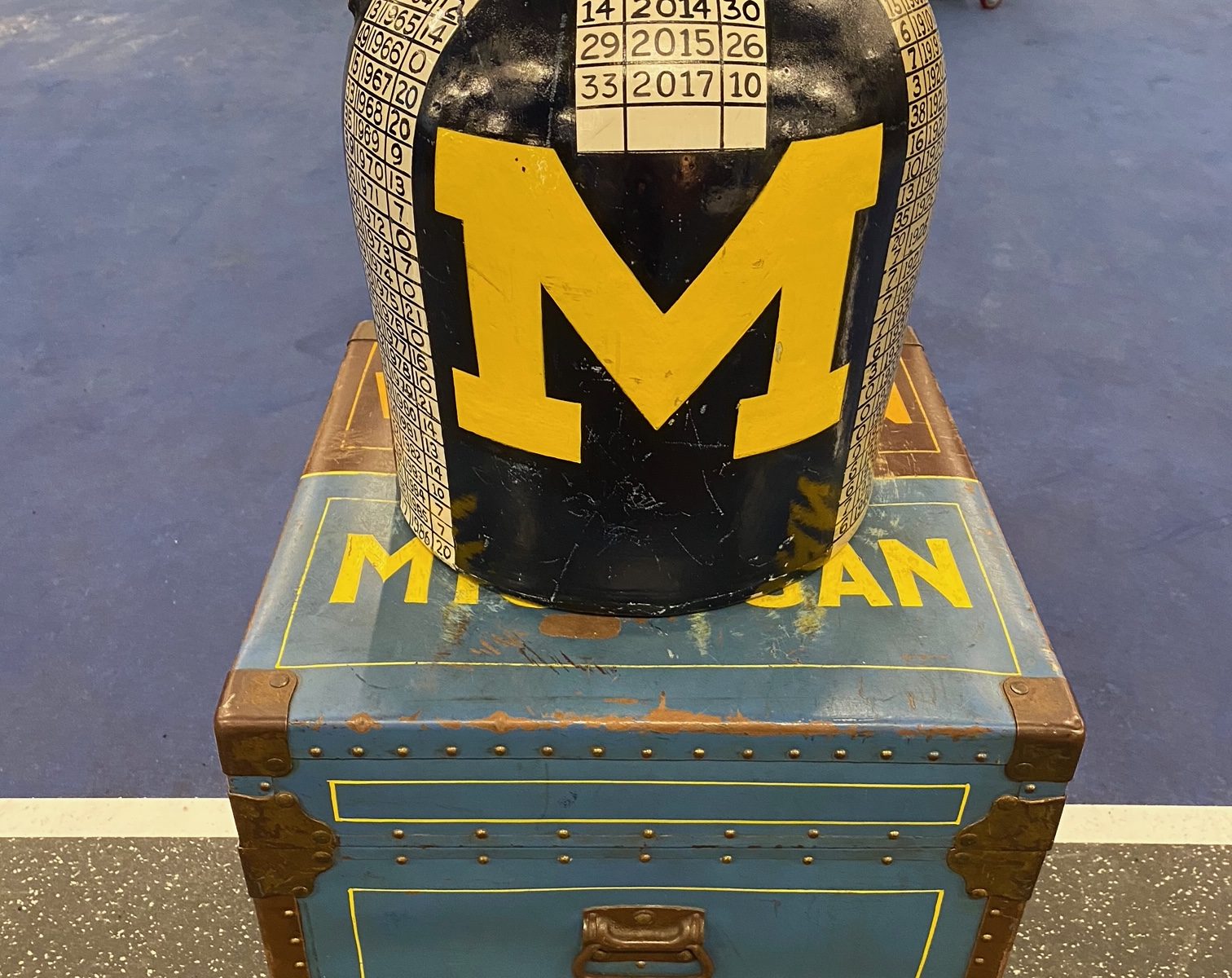
The fifth installment of the series focusing on the Little Brown Jug takes us to 2015. The Jim Harbaugh era started slowly at Michigan, as the Wolverines lost their opener at Utah and struggled to find their mojo through the first few games. Eventually, defense would become their identity, and that was on full display on the final play of the 2015 game at Minnesota.

The game began innocently enough. The Michigan defense held Minnesota to a field goal, and Jake Rudock answered by leading the Wolverines on a long drive, connecting with Jake Butt and Deveon Smith for significant gains. Joey Kerridge went in from the 1-yard line to give Michigan the lead. The Rudock connected with Jehu Chesson for a 13-yard touchdown pass, and the Wolverines were up, 14-3. All was well, or so it seemed.

But the 2015 Golden Gophers were a pesky bunch. The two teams traded scores for much of the game, with Wilton Speight connecting with Chesson for a 12-yard touchdown pass to give Michigan a 29-26 lead in the fourth quarter.

Now, it was up to the defense. Michigan alumni and fans spent a fair portion of the final minutes biting their nails. Minnesota seemed to be gaining yardage at will, and for a brief moment, it appeared the Gophers had scored the go-ahead touchdown with 19 seconds left. Upon further review, the officials ruled that the receiver was short of the goal line when he knee went down, so Minnesota had a first down at the half-yard line. Once the clock started, the Gophers managed to burn 17 seconds on an incomplete pass attempt, leaving them just two seconds on the clock, time for only one more play. Recognizing the situation, Michigan prepared its goal line defense, ensuring that every player got very low to the ground, to give them leverage.

Once the ball was snapped, the maize and blue winged helmets surged forward, knocking the Minnesota offensive line backward. The officials took a while to make the final call, but it was really just a formality. Anyone who saw the play knew that Michigan had stopped Minnesota, and the Wolverines claimed a 29-26 victory, one of the most exciting games in the history of the series.

Thanks to YouTube, ESPN and YouTube poster CFB Fans for the attached broadcast of the game. As always, we own nothing and this blog post is provided strictly for the enjoyment of readers.

This and other great content can be found at newyorkwolverine.com